
Notes On: herbalism
welcome to potions class

Welcome to my new series, Notes On! For the last few months, I’ve been thinking about how I can bring more value to this community. But I’ve repeatedly run into a block: I hate giving advice. It makes me viscerally uncomfortable to posture as any sort of authority. Truth is, we don’t need more advice, and there is no one “correct” way to be.
So instead of offering prescriptions, Notes On is moreso me sharing my experience—the things I’ve struggled with, questioned, researched, sat with, and how I found my way (or am in the process of finding my way) out of them.
Think of them less as guides and more as field notes. An honest account of what I’ve learned so far, offered in the hope that something here might help you make sense of your own experience.
I’ll be honest with you—I was debating whether or not to write this. I love working with herbs and plants. I think they’re incredible. But as is my affliction, I always think there are better, more qualified people that you could be getting your information from, and I have a severe aversion to telling people what to do.
But then, as I was scrolling, I came across this ad for a “rest and digest” tea:
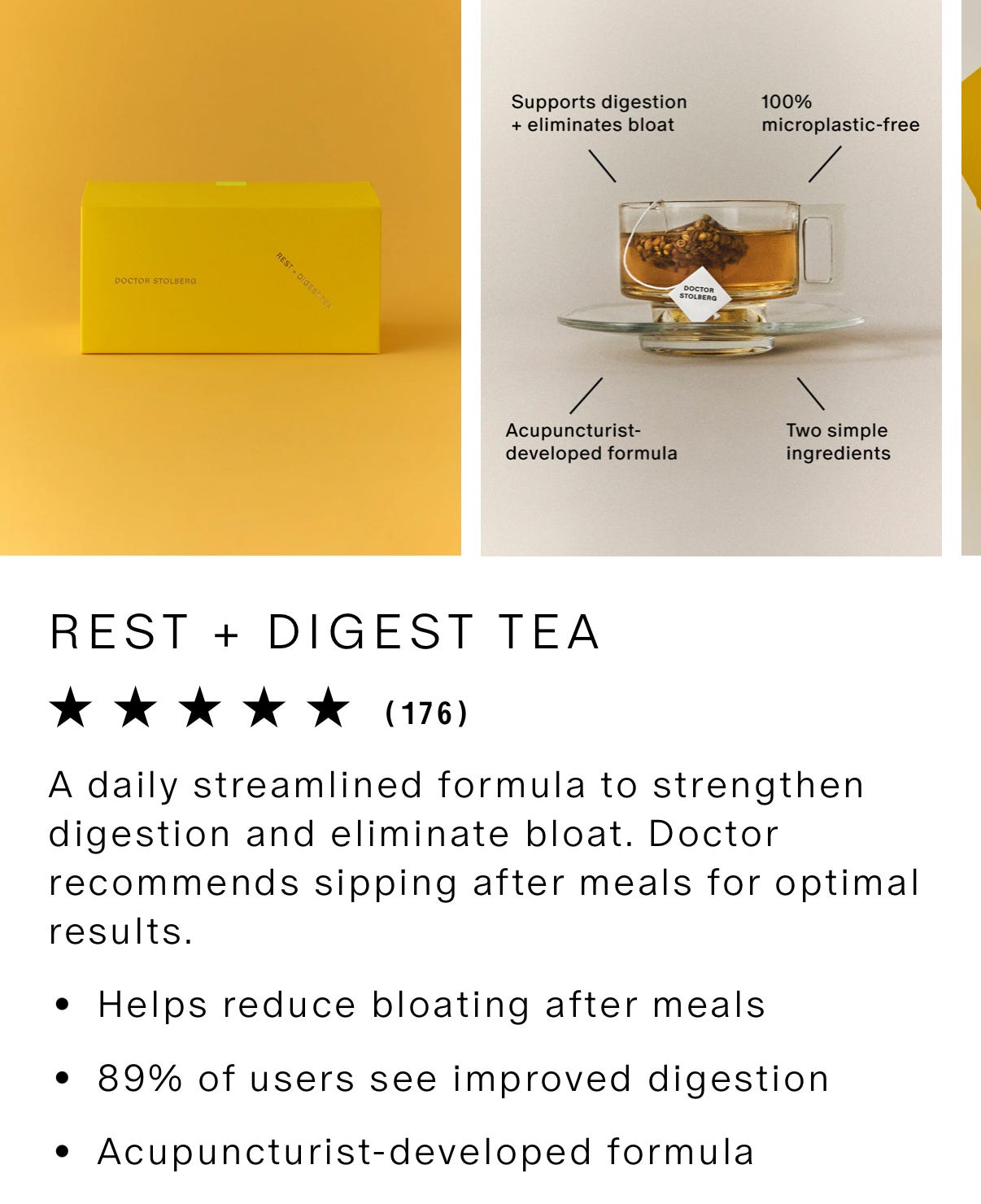
Intrigued, with a bit of curiosity and excitement, I opened it. I’m 100% here for herbal remedies becoming more mainstream, and I was interested to see what they were using in their blend, if only to confirm, test, and expand my own herbal knowledge.
But as I scrolled the page, my heart sank a little. First, with the price—$45 for 30 servings. Ok… I mean, could be worse… let’s see what’s in it…
Then I looked at the ingredients, and the wind was completely taken out of my sails:
Cumin and Coriander seed.
That’s it.
A “proprietary blend” of… cumin seed and coriander seed.
And that got me fired up, so here I am.
No shade to the doctor who formulated and sells this tea—we’re all just trying to survive capitalism, and, as I said, I’m all for herbal remedies going mainstream. But to me, a $45 tea of some of the simplest and most accessible herbs is indicative of a deeper issue: we’ve forgotten how to work with plants. Heck, we’ve forgotten that that’s even a thing. This tradition and its deep wisdom that spans thousands of years and is a cornerstone of the human experience, all but lost in the modern era.
And its remembering is being sold back to us as a luxury good.
If your experience was anything like mine, you were raised to look down on anything “natural” (which, honestly… insane). As educated people of science, natural remedies were for white people with dreadlocks who smelled like patchouli, hugged trees, and didn’t vaccinate their children. These “natural” folk would surely perish for their folly.
At the same time, albeit ironically, there was a religious, patriarchal undertone that associated naturalists with paganism of witchcraft, which would surely see them burn in hell once they did succumb to the common cold.
Meanwhile, I was pounding ibuprofen basically every day for every minor ache and pain.
Fantastic.
So much of what we allow into our reality comes down to our beliefs about our identity. If we see natural remedies as being for people who smell like patchouli and walk around in public barefoot, and we don’t identify with those things, then we will believe that herbs must be for them and not us.
But the world becomes so flat and uninteresting when we put ourselves into boxes like that. When we divorce ourselves from curiosity, life only narrows. It’s possible to believe in science and in plants. In fact, I’d argue belief in the former and not the latter is simply ignorance. Do not limit yourself with labels—we contain multitudes!
So, over the last couple of years, I’ve transitioned from having a casual interest in herbalism to it becoming a full-blown hobby. It started in my early 20s. Left disillusioned and disheartened by conventional medicine, I began searching for other methods to try to heal myself—to address the root issues of the problems I was facing, instead of simply getting prescribed a run around of pills (after almost zero discussion) to treat my symptoms.
Alongside lifestyle adjustments, I started using different herbal remedies to help. I mostly went in blind, relying on the internet and companies that made different blends to help. Companies that sell herbal remedies, much like the one listed above, have an important role to play. The average person has very little to no herbal knowledge. Companies that make and sell different blends make them feel safe and accessible. But I view these things as training wheels—gateways to learning.
The medical industrial complex exists on a predication that they have the knowledge, and we don’t (which, in their defence, don’t ask me to perform a surgery), leaving us at the mercy of the keepers of the gates, making us helpless to their medicines. But the truth is, nearly every medicine in your cabinet was derived from plants, whether directly or indirectly through creating synthetic versions of plant compounds. The use of herbal medicines dates back nearly 60,000 years to present-day Iraq, and has subsequently been used by every indigenous community around the world for many thousands of years.
Aspirin is derived from white willow bark, metformin was inspired by compounds found in French Lilac, quinine—and its synthetic counterpart, hydroxychloroquine—is used to treat malaria, and is derived from the Cinchona tree. Traditional herbal use of foxglove informed the development of one of the first effective heart medications, Digoxin. Research on Madagascar Periwinkle revealed compounds that revolutionized the treatment of certain leukemias and lymphomas.
I want to be clear: I am NOT advocating that modern medicine is bad. Modern medicine is a miracle, and there’s no time I’d rather be living in right now. But it’s not with out it’s drawbacks. Both things can simultaneously be true. As money and politics get increasingly involved, medicine and healing get further and further diluted. And now, we’re at a point where we’ve entirely outsourced our knowing and authority to people in white coats (who are, at the end of the day, fallible humans like the rest of us, who are subject to their own incentives and biases) and have completely severed from and forgotten the healing powers of nature available to all of us.
If we learned anything in 2020, though, it’s that our institutions are fragile. And when they crumbled under the weight of a crisis and the veil was lifted, we realized what a lack of self-sufficiency and over-dependence on these institutions really costs us.
So, what follows is my small contribution to a reawakening. There are a lot of ways to use herbs—from salves and balms, to tinctures, poultices, and compresses. But today, we’re going to be focusing on the primary way I use them, and what I think is the friendliest way to work with them for beginners: teas and infusions. I’m going to give a breakdown of herbs by category and their traditional uses, focusing on the most efficacious and accessible varieties. Keep in mind that it is perfectly acceptable to rely on premade teas, tinctures, etc., as a way to still get the herbal benefits with a lower barrier to entry, or if walking into your local apothecary feels intimidating (and if you don’t have one, my local apothecary ships!).
May you not get duped into paying $45 for cumin and coriander.
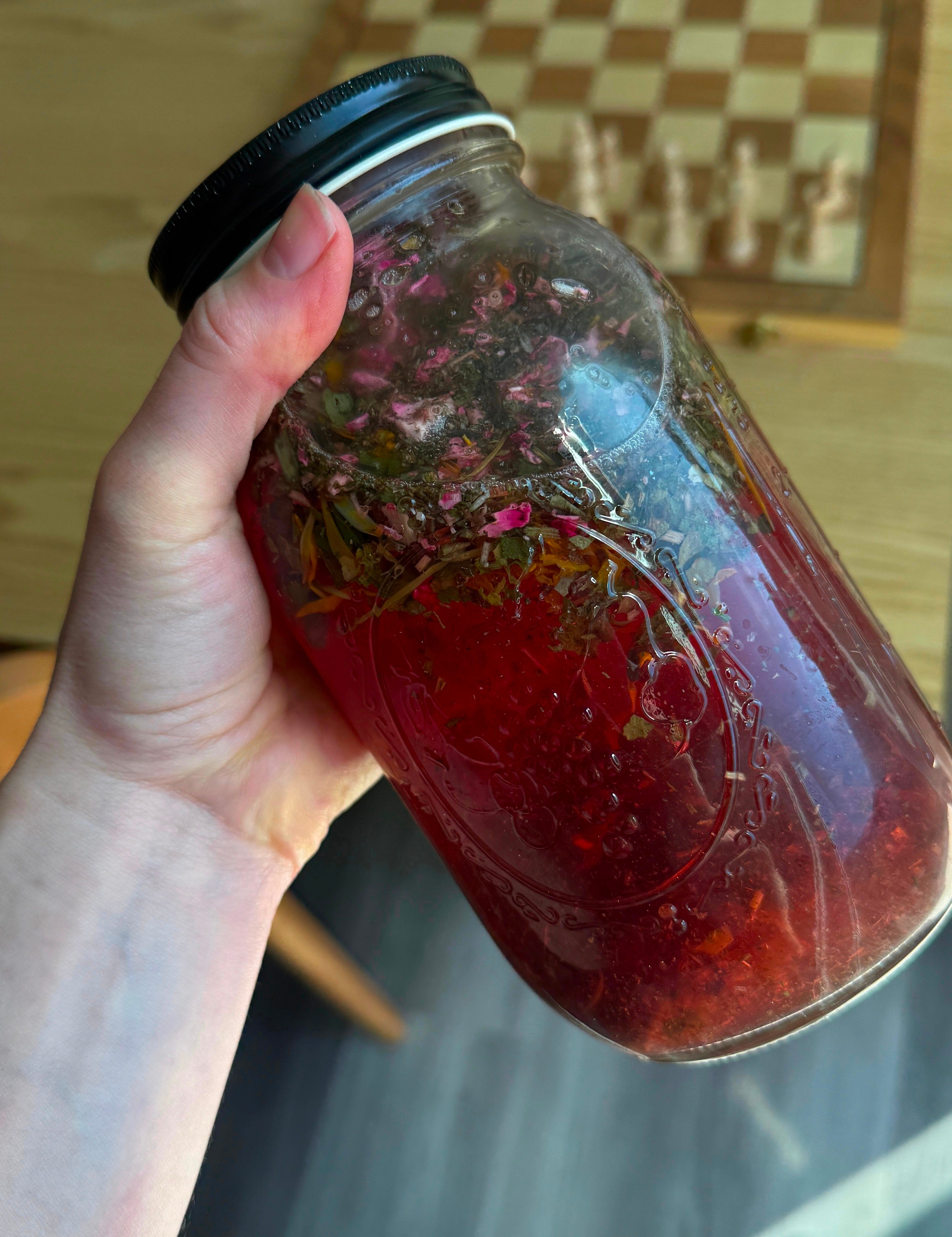
Also of note before we dive in: The beauty of herbs is that many fit in more than one category, meaning you could get a small handful of herbs and cover a lot of bases! Nettle, for instance, is an herbal powerhouse that I consume pretty much daily for a variety of uses. And, of course, nothing in the body works in isolation—something that is good for stress is also probably going to be good for inflammation, skin, etc. So when things show up repeatedly, they will simply be listed without their description. This doesn’t mean it’s secondary! It’s just to save space. Nonetheless, I think organizing them by categories like this is helpful and is the exact way I learned!
This is not intended to be medical advice, and I am not a professional. Consult your healthcare provider.
